

High Volume Component Plating Services
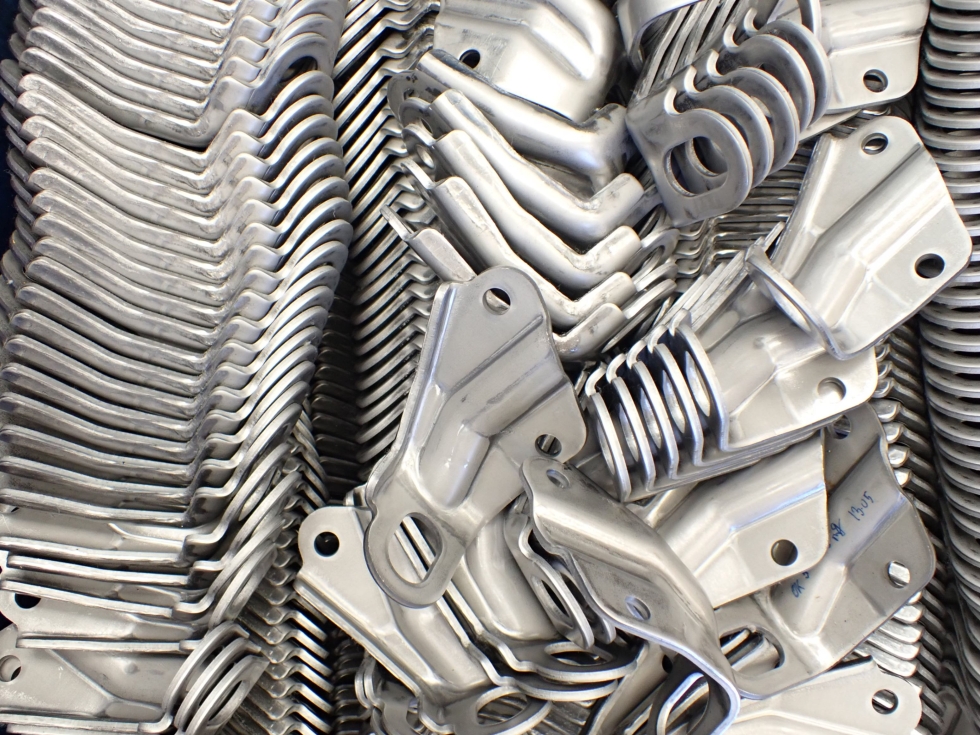
Precision metal parts require absolute dimensional consistency across every production run to prevent assembly failures. Standard electroplating results in uneven metal buildup at corners, which ruins tight print tolerances on large lots. Finding a processing vendor that can meet these exact specifications is challenging for procurement teams.
At Micro Plating, we deliver the following:
- High-volume component plating services, including high and mid-phosphorus ENP, Black ENP, mold and part coatings, and AMS, ASTM, & MIL-C
- Uniform coating thickness throughout the entire batch
- Dimensionally accurate parts
- Predictable turnaround times
Read on to learn more about our automated processing lines and strict testing standards.
Get a Quote for High Volume ENP Component Plating
Advantages of Plating Components at High Volume
Industrial manufacturing schedules depend on predictable component processing timelines to avoid costly assembly line shutdowns. Transitioning from small-batch finishing to large-scale production runs alters the logistics and economic structure of the finishing phase:
- Production Cost Optimization: Processing thousands of parts simultaneously reduces the labor hours required for machine setup and chemistry stabilization. This efficiency lowers per-part finishing costs and optimizes capital allocation.
- Lead Time Stabilization: Consolidated production orders establish a fixed delivery schedule that aligns directly with internal assembly timelines, eliminating the need for large inventory cushions or warehousing overhead.
- Freight Logistics Consolidation: Shipping components in a single, large-volume consignment rather than multiple small batches minimizes total transportation costs and reduces administrative freight-tracking workloads.
- Procurement Process Simplification: Managing a single contract for a high-volume run eliminates the need to coordinate with multiple regional shops. Purchasing departments save time by routing all POs and engineering specs through a single point of contact.
- Production Scheduling Continuity: Large-scale orders allow finishing facilities to dedicate specific tanks and automated lines to a single product line for extended periods, maximizing equipment uptime.
High-Volume ENP Component Plating from Micro Plating
At Micro Plating, we provide high-volume ENP plating services through automated lines that keep large production runs moving without mid-batch delays. This continuous chemical processing ensures that every component receives an identical coating thickness, which prevents assembly-line rejections and parts-fitting issues later on.
Our team runs these high-capacity lines to apply a range of specialized nickel alloys and composite finishes that meet precise engineering tolerances.
Electroless Nickel Plating
Our ENP autocatalytic baths coat hidden threads and deep internal cavities evenly, which saves money by eliminating the need for post-plating grinding or machining:
High Phosphorus Electroless Nickel Plating
This 10%-12% high-phosphorus alloy forms an amorphous barrier that protects the underlying steel from aggressive acids and severe environmental exposure. Post-plating baking increases the coating hardness up to 70 Rc. This extreme hardness prevents parts from scratching or galling under heavy friction.
Medium Phosphorus Electroless Nickel Plating
Our 6%-9% medium phosphorus ENP accelerates chemical deposition, thereby reducing total finishing costs for blanket PO ENP plating services. The resulting finish provides a higher initial as-plated hardness, which gives moving machine components immediate wear protection right out of the bath.
Black Electroless Nickel Plating
This process deposits a slightly conductive, matte black finish over a corrosion-resistant base layer. It eliminates glare on precision optical, aerospace, and MIL-DTL-38999 military components. The finish also reduces light reflection on tactical equipment and maintains the electrical continuity required for connector shells and grounding interfaces. Demand for black ENP has increased because it provides corrosion protection and a non-reflective surface in a single deposition step, which eliminates the need for secondary coatings or paints.
Proprietary Composite Plating Solutions
For high-friction components, we integrate fluoropolymer or boron nitride particles directly into the nickel plating matrix to provide built-in dry lubricity. MicroLube utilizes hydrophobic PTFE particles to deliver up to 240 hours of salt spray resistance at thin layers, while MicroSlik embeds hexagonal boron nitride to constantly refresh the wear layer during continuous mechanical operation.
Certified Specification Conformance
Every repeat order batch is produced under strict chemical controls to ensure compliance with aerospace, defense, and commercial finishing standards. Our facility regularly certifies large production orders to the requirements of AMS 2404, ASTM B733, and MIL-C-26074 while maintaining full RoHS and REACH environmental compliance.
Surface Pretreatment and Heat Treating
Our technicians perform mechanical pretreatment and thermal post-treatment in-house to manage the entire finishing cycle for large production orders. Running these secondary operations within the same facility eliminates the shipping delays and part-handling risks associated with third-party outsourcing. High-volume component runs move through two specific preparation and hardening steps based on your raw material specifications:
Glass Bead Blasting
Operators blast raw components with spherical glass media to remove burrs and surface scale before the parts enter the chemical tanks. This internal mechanical cleaning creates a uniform matte profile that ensures maximum adhesion of the subsequent electroless nickel layer without changing critical part dimensions.
Inert Atmosphere Baking
Baking high-strength steel components in an inert gas oven before plating drives out trapped hydrogen and prevents hydrogen embrittlement. Following chemical deposition, our team applies a post-plating thermal bake to restructure the nickel-phosphorus matrix and maximize the wear life of the finished parts.
Quality Control for Large-Volume Plating Requests
Maintaining part dimensions across thousands of consecutive units requires precise metrology and constant bath calibration. Our technicians test chemical concentrations throughout the deposition process to verify that the nickel layer meets the specified thickness callouts. This continuous tracking stabilizes the deposition rate, preventing thin spots or excessive buildup on complex geometries.
Every high-volume production lot undergoes X-ray fluorescence analysis and precision microscope inspections to confirm consistent thickness. Operators execute physical bend tests or thermal shock procedures to verify that the chemical bond meets adhesion standards before shipment. These step-by-step inspection procedures ensure that high-throughput production speeds never cause parts to deviate from engineering print tolerances.
Industries That Require High-Volume Plating
High-throughput assembly lines rely on batch-processed chemical nickel to protect machinery from friction and chemical degradation. Plant engineers route large production lots through finishing tanks to ensure uniform wear resistance across every surface. Five specific industrial groups utilize these mass finishing runs for their standard part configurations:
- Aerospace: Landing gear, hydraulic fittings, and engine housings require high-volume ENP plating services to withstand heavy mechanical friction and rapid atmospheric changes during high-altitude operation.
- Automotive: Commercial vehicle factories apply electroless nickel coatings to engine parts, fuel system lines, and transmission housings to prevent corrosion from constant heat exposure.
- Defense: Manufacturers rely on large-scale ENP plating services for tactical components, electrical connectors, and weapon parts to meet strict performance and non-reflectivity standards.
- Medical: Applying biocompatible nickel layers to surgical instruments and diagnostic equipment prevents base metals from rusting during repeated autoclave sterilization cycles.
- Injection Molding: Plating high quantities of tool and die mold cavities, cores, and ejector pins eliminates surface wear caused by continuous plastic extrusion and clamping friction.
High Volume Component Plating FAQs
Q: What is the maximum thickness limit for your electroless nickel coatings?
A: Deposits reach a maximum thickness profile of 0.003 inches on our high-capacity lines.
Q: Which environmental standards do your high-volume finishing lines meet?
A: Every production lot fully complies with both the RoHS and REACH environmental directives.
Q: Where does your company ship completed blanket PO orders?
A: Freight carriers transport finished batches directly from our Erie, Pennsylvania, facility to manufacturing plants nationwide.
Q: How does electroless nickel deposition behave on sharp part corners and edges?
A: Uniform chemical reaction rates prevent the edge buildup common in standard electroplating, thereby keeping sharp corners within blueprint tolerances.
Q: What baseline data must your team analyze to provide a high-volume price quote?
A: Engineers evaluate your specific coating thickness requirements alongside total annual part volumes to calculate bulk pricing.
Choose Micro Plating for Your High-Volume Component Plating Needs
Preventing premature part failure requires constant chemical monitoring and uniform surface preparation across every production lot. Implementing these strict processing controls provides the wear resistance required for successful high-volume component plating.
Micro Plating operates automated tank systems and X-ray fluorescence analyzers to manage your large-scale manufacturing contracts. Our technicians verify the exact coating thickness of every batch to protect your engineering tolerances and production margins.
Click below for a quote and to learn more about our automated finishing services.