

Electroless Plating for Aerospace Parts
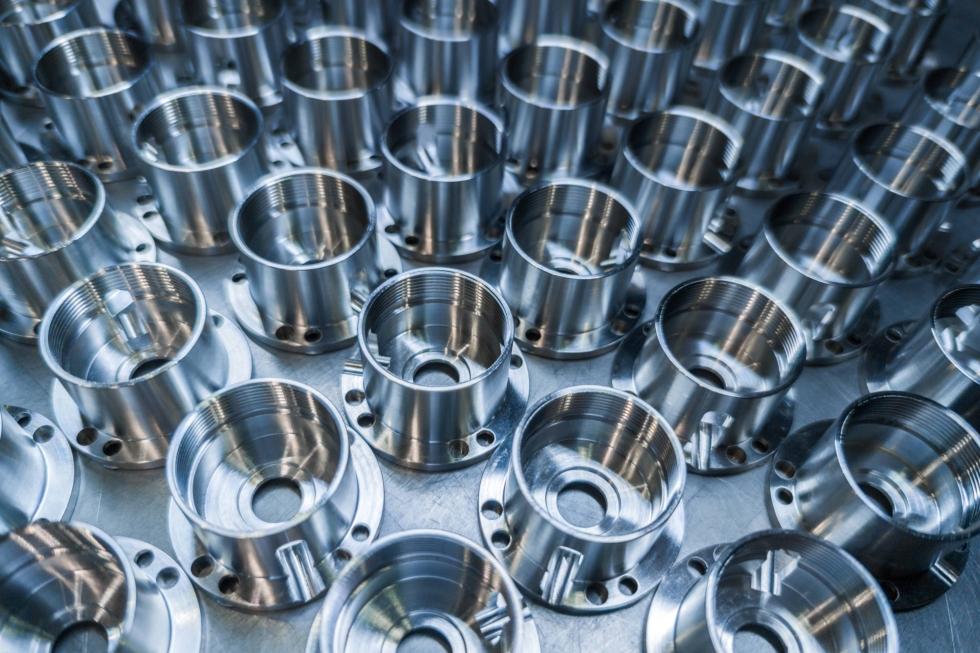
Aerospace parts often need surface protection that does not create fit problems after finishing. This can make plating selection difficult when the part has tight tolerances, internal features, or documented surface requirements.
Micro Plating provides electroless plating for aerospace parts that require controlled deposit thickness, surface protection, and order-specific finishing documentation. That support helps buyers avoid plating decisions that could potentially create problems during inspection or assembly.
Read on to learn how electroless plating for aerospace parts affects coating selection and finished part acceptance.
Get an Electroless Plating for Aerospace Parts Quote
What Does Electroless Plating Do for Aerospace Parts?
Electroless plating deposits a controlled metal coating on a part surface without using an external electrical current. Aerospace parts often use this process because it can protect complex shapes, internal surfaces, threads, and recessed areas with consistent coverage.
Surface Protection for Precision Aerospace Components
Electroless plating supports several performance needs tied to aerospace part function, service life, and dimensional control. The process helps protect base materials without adding uneven buildup that can interfere with fit or movement.
Uniform coating coverage: Electroless plating forms a coating through a chemical reaction at the part surface. This helps the deposit reach bores, threads, edges, and recessed areas more evenly than many line-of-sight finishing methods.
Corrosion resistance: Aerospace parts may encounter moisture, handling, cleaning agents, and corrosive exposure during service or maintenance. A corrosion-resistant coating helps reduce surface attack that can shorten part life or affect assembly performance.
Wear resistance: Moving parts and contact surfaces can lose material through friction, sliding, or repeated handling. Electroless nickel coatings can increase surface hardness, which helps reduce wear on parts with close-fit or repeated-use requirements.
Dimensional control: Aerospace components often have tight tolerances, so coating thickness must remain consistent throughout the part. Controlled deposit thickness helps preserve part geometry and reduces the risk of buildup on edges, corners, or exposed surfaces.
Coating selection flexibility: Electroless plating can be adjusted through coating chemistry, phosphorus level, and post-treatment requirements. This helps match the coating to corrosion, hardness, magnetic, or friction requirements for the finished part.
Fewer Fit Issues After Plating
Uneven coating thickness can create clearance problems on finished aerospace parts. Electroless plating helps reduce that risk by supporting controlled coverage on surfaces that must still fit, move, or assemble correctly after finishing.
Micro Plating’s Electroless Nickel Services for Aerospace Parts
At Micro Plating, we provide several electroless nickel coating options for aerospace parts with different surface performance requirements. Our team can perfectly match the plating process to your specific part material, coating thickness, surface geometry, and finish requirements.
Plating Options Matched to Part Requirements
Not all aerospace parts require the same coating system to function reliably in the field. Some components need a corrosion-focused finish, while others require extreme hardness, dry lubricity, low reflectivity, or post-plate heat treatment.
High-Phosphorus Electroless Nickel: For parts that demand maximum corrosion resistance and a fully non-magnetic coating, our high-phosphorus ENP baths deliver exceptional results. This option easily supports aerospace components exposed to harsh environmental conditions or highly sensitive assembly requirements.
Medium-Phosphorus Electroless Nickel: Our medium-phosphorus ENP solution is ideal when your application calls for controlled hardness, excellent wear resistance, and a brighter finish. This coating supports visible parts and contact surfaces that require a harder plated layer while maintaining a clean surface appearance.
MicroNite Black Electroless Nickel: Optical components and electrical connectors often require a black, low-reflective surface without sacrificing corrosion and wear performance. Our proprietary MicroNite dual-layer process achieves this exact finish for aerospace parts where surface reflection must be strictly controlled.
Composite Coating Options: Reducing friction and galling is simple with our MicroLube (PTFE) composite coating, which provides excellent dry lubrication. If your components require lubricity and wear resistance at higher temperature thresholds than PTFE can handle, our MicroSlik (boron nitride) coating is the perfect alternative.
Inert Atmosphere Baking: Strict thermal process control is available through our inert atmosphere baking, which can be performed either before or after plating. This critical service supports stress relief, hydrogen embrittlement mitigation, adhesion, and oxidation control on high-strength aerospace alloys.
Streamlined Aerospace Supply Chains
Our comprehensive facility provides aerospace manufacturers with direct access to high-phosphorus nickel, black electroless nickel, composite coatings, and inert atmosphere baking. This extensive range of capabilities helps procurement teams avoid splitting related finishing work across multiple vendors when different parts require unique surface properties.
Aerospace Plating Quality Controls and Compliance Support
Specification-controlled aerospace parts require more than the right coating chemistry. At Micro Plating, we support these parts with inspection, process monitoring, documentation, and in-house quality controls.
Inspection and Process Controls for Plated Parts
Our quality program meets the requirements of MIL-I-45208 and begins before parts enter the plating process. We use receiving inspection, detailed job cards, and centralized order tracking to ensure each job follows the correct processing steps.
During production, our team uses precision microscopes, Fischer scopes, and X-ray fluorescence analyzers to verify coating thickness, adhesion, and finished surface requirements. These inspection steps help confirm that the plated surface matches the job requirements before the order leaves our facility.
Our in-house lab monitors cleaners, acids, and plating chemistry against manufacturer specifications. Daily SPC review helps us identify process irregularities early, which supports more consistent plating results across repeat orders.
Fewer Approval Issues After Plating
Aerospace buyers need plated parts that match the purchase order, drawing notes, and required documentation. Our in-house inspection, lab monitoring, and compliance support help reduce approval issues after plating and provide customers with clearer records of the parts they receive.
How Do Aerospace Part Requirements Affect Plating Choice?
Coating chemistry, thickness, hardness, appearance, and post-treatment variables directly dictate how a finished surface performs in flight. At Micro Plating, we review the base material, geometry, surface requirements, and service conditions before recommending a coating path.
Evaluating the Part for the Right Finish
Part material is one of the first selection factors because aluminum, steel, copper, and other alloys can respond differently to cleaning, plating, adhesion, and baking steps. Geometry also matters because bores, threads, slots, tubing, and close-clearance surfaces may require coating thickness control in areas that are difficult to finish evenly.
Surface function guides the choice of coating once the material and geometry are understood. Aerospace components exposed to extreme altitudes, hydraulic fluids, or marine environments require different barrier properties from internal cabin mechanisms, which primarily face repetitive mechanical friction.
Some aerospace parts need added properties beyond basic corrosion or wear resistance. Requirements related to reflectivity, friction, conductivity, heat exposure, adhesion, or hydrogen embrittlement can determine whether the part requires a specialty coating, a composite deposit, or baking before or after plating.
Getting the Plating Callout Right the First Time
A complete review of the part requirement helps identify the coating option, thickness range, and post-plate process before production begins. This comprehensive evaluation provides customers with an accurate quote and helps reduce mismatches among the drawing, the plating callout, and the finished surface.
Electroless Plating for Aerospace Parts FAQs
Q: What coating thickness can Micro Plating provide for electroless nickel aerospace parts?
A: We can provide electroless nickel deposit thicknesses ranging from .0001 to .0035 inches. This precise control helps aerospace engineers accurately plan for coating buildup and tight tolerances before production begins.
Q: Are your electroless nickel services RoHS and REACH compliant?
A: Yes, our high-phosphorus, medium-phosphorus, and MicroNite black electroless nickel plating services are fully RoHS and REACH compliant, ensuring your aerospace components meet strict environmental and safety regulations.
Q: How many hours of salt spray resistance does high-phosphorus electroless nickel provide?
A: Our high-phosphorus electroless nickel plating provides exceptional, military-grade corrosion protection, withstanding 1,000+ hours of salt spray testing (per ASTM B117) on both aluminum and carbon steel substrates.
Q: What is the maximum hardness achievable with electroless nickel plating?
A: While our medium-phosphorus baths provide an excellent as-plated hardness of 54-65 Rc, we can utilize post-plate heat treatment to elevate the hardness of our high-phosphorus coatings up to 68-70 Rc for extreme aerospace wear applications.
Q: Do you offer custom masking for selective plating on aerospace parts?
A: Yes, we provide custom masking and selective plating services. This allows us to precisely plate specific areas of an aerospace component while leaving other surfaces (e.g., critical grounding points or weld zones) completely bare.
Partner With Micro Plating for Electroless Plating for Aerospace Parts
Choosing the correct electroless plating for aerospace parts ensures long-term performance at high altitudes. A carefully selected coating prevents premature wear and protects expensive base materials from severe corrosion.
Micro Plating delivers consistent surface finishes for the most demanding aviation applications. Our strict quality controls eliminate guesswork and keep production schedules moving forward.
Click below for a quote and to learn more about our specialized aerospace coating capabilities.