

Industrial Applications for Black ENP
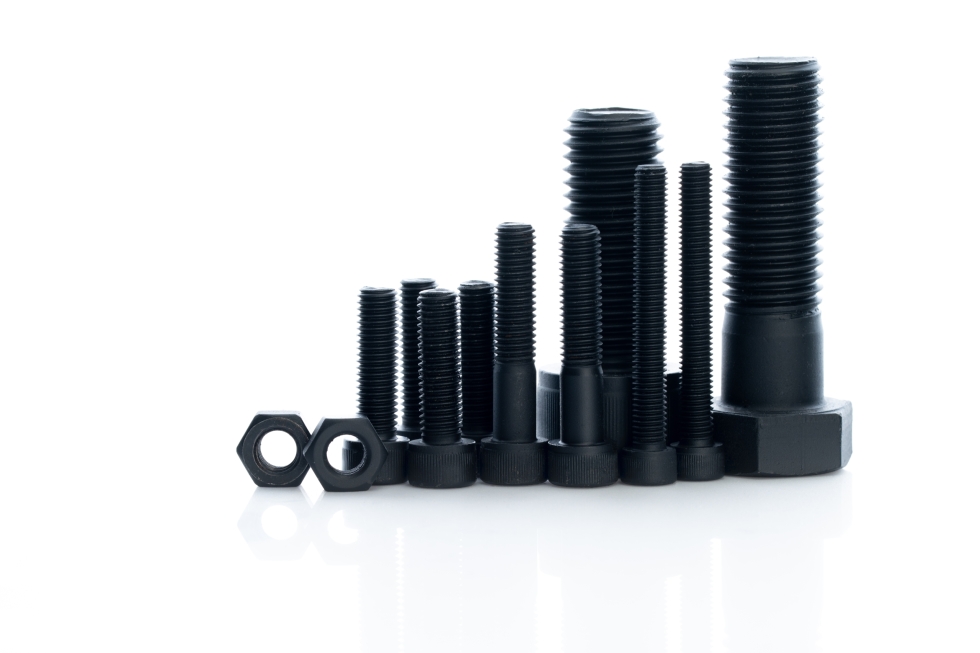
Getting a black finish on a metal part often means giving up corrosion or wear protection. The list of options gets shorter with military specs and hazardous substance rules in the mix. Picking the right black finish for a functional part can be a challenge.
At Micro Plating, we help you control glare and protect the part with one black coating. That saves you from trading corrosion or wear protection for the black color on functional parts.
Read on to learn more about applications for black electroless nickel plating (black ENP) and how to specify it for your parts.
Get a Quote for Black Electroless Nickel Plating
Why Engineers Specify Black Electroless Nickel Plating
Black electroless nickel plating (black ENP) is an electroless nickel coating with a thin black layer on the surface. The deposit underneath is the same nickel-phosphorus alloy used in standard electroless nickel plating.
- Even coating thickness: Nickel builds up at a steady rate on every surface in contact with the plating solution. Threads, holes, and internal bores get close to the same thickness as flat faces.
- Low reflectance: The black layer absorbs most of the visible light hitting the part. You get a more matte finish on a textured base surface than on a polished one.
- Corrosion resistance: The nickel-phosphorus deposit is a barrier between the base metal and moisture. High-phosphorus deposits outlast medium-phosphorus grades in salt spray testing.
- Hardness and wear: Plated parts resist abrasion with no added treatment. You can raise the hardness further with a post-plate heat treatment. The thin black layer can still wear through to silver-gray nickel at sliding contact points.
- Conductive surface options: Electrical conductivity of the black layer varies by process. Ask your plater for measured contact resistance data.
MicroNite Black Electroless Nickel at Micro Plating
MicroNite is our proprietary black ENP process. We plate a high-phosphorus electroless nickel base first and then add a low-phosphorus black topcoat. Every part then goes through a passivation step.
- Low-reflectance conductive topcoat: The black topcoat has a minimally reflective finish and slight electrical conductivity. Its conductivity comes from the low phosphorus content in the topcoat.
- Hardness with a post-plate bake: MicroNite can reach 58 to 63 HRC with an added post-plate bake after passivation. Black powder coating is softer by comparison and more prone to chipping.
- Salt spray resistance and recess coverage: MicroNite withstands up to 1,000 hours of salt spray exposure. The 1 mil deposit reaches holes, slots, threads, and the inside of tubing for continuous protection in those features.
- Regulatory compliance: Our coating meets RoHS, REACH, and ELV requirements. Every shipment includes a Certificate of Compliance.
- Quality control: We check coating thickness and adhesion during plating and again at final inspection. Those measurements come from precision microscopes, Fischer scopes, and X-ray fluorescence analyzers. In our in-house lab, we maintain all processing solutions to manufacturer specifications and review SPC data daily.
- In-house support and lead time: We handle inert atmosphere baking and glass bead blasting in-house alongside our plating work. You can request expedited processing on top of our six-day standard lead time.
Applications of Black ENP
Many metal parts need a black finish to control light or to meet a spec. The reason for that finish changes from one application to the next:
Aerospace Optical Housings
Light bouncing off the inside walls of an optical housing reaches the sensor as stray light. Stray light adds noise to the signal and can create ghost images. You reduce it by coating housing walls and baffles near the beam path with a black finish.
Black ENP has been used on the baffles of many spacecraft instruments. Organic black paints release volatile material in vacuum and can leave deposits on cold mirrors. The black ENP deposit is inorganic and loses almost no mass in space conditions.
Military Circular Connector Shells
Olive drab cadmium over nickel has been a common shell finish on MIL-DTL-38999 circular connectors. The Defense Logistics Agency added three cadmium alternatives to that spec in 2008: nickel-PTFE, zinc-nickel, and pure electrodeposited aluminum. In 2012, the agency added black electroless nickel with a trivalent conversion coat to MIL-DTL-55181 as a fourth option.
The cadmium finish and its three 2008 alternatives all have to be conductive and nonreflective and pass a 500-hour dynamic salt spray test. MIL-DTL-55181 has a lower corrosion requirement of 48 hours in a non-dynamic test. Our MicroNite finish can meet MIL-DTL-38999 specs for electrical connector shells.
Automotive Fasteners and Trim
Lead, mercury, cadmium, and hexavalent chromium are restricted in vehicle parts under the EU End-of-Life Vehicles (ELV) Directive. Zinc plating with a hexavalent chromate conversion coat was one of the most common automotive finishes before the directive. Since July 2007, hexavalent chromium can no longer be added on purpose to corrosion-preventive coatings on EU vehicles.
Black fasteners, trim, and engine components for the EU market need a finish without hexavalent chromium. Our MicroNite finish meets that requirement. It also has more consistent color and better abrasion resistance than black zinc or zinc-nickel coatings.
Firearm Components
Bluing is a common low-glare finish on firearm steel. Rust protection on blued steel is minimal without frequent light oiling. You can switch to black ENP for a low-glare black finish over a nickel-phosphorus corrosion barrier.
Our MicroNite black color goes only 1 micron into the surface of the part. Sliding surfaces on a charging handle can wear through that layer to silver-gray nickel. The nickel-phosphorus deposit underneath still covers the part after that wear.
Surgical Instruments for Laser Procedures
Most surgical lasers are Class 4 and present eye, skin, and fire hazards. ANSI called for diffusely reflective materials in or near the beam path in a 1980s draft of its health care laser standard. You can get a diffusely reflective black finish by plating black ENP over a textured base surface.
Black ENP on laser surgery instruments has two limits to check. Blackened instruments heat up fast under a direct laser hit. Patient-contact parts also need biocompatibility test data before use.
How to Specify Black ENP for Your Parts
Plating shops work from the callout on your drawing or purchase order. A missing field can mean the wrong bake class, plated grounding points, or out-of-tolerance parts. Work through these six steps for every black ENP order.
Step 1: Record the base material and hardness. List the base alloy and its heat-treat condition on the drawing. Your plater uses both to set the cleaning, plating, and bake steps.
Step 2: Write the base coating callout. The nickel-phosphorus base layer falls under ASTM B733. Give the type for phosphorus content, the service condition for exposure severity and minimum thickness, and the class for post-plate heat treatment.
Step 3: Set the post-plate bake. Steel with an actual tensile strength of 1,000 MPa or higher (about 31 HRC) needs a hydrogen embrittlement relief bake under ASTM B850. Put the B850 treatment class on the drawing next to the plating callout. For age-hardened aluminum, the B733 adhesion bake is Class 4 at 120 to 130 degrees Celsius.
Step 4: Add a black finish note. The B733 type, service condition, and class do not describe a black finish. Name the black finish in a separate note. Use MicroNite black electroless nickel plating as the name for our process.
Step 5: Mark the masked surfaces. Call out grounding points, weld zones, and any other surfaces to leave bare. Those areas get masked ahead of plating.
Step 6: Allow for plating thickness. Label each dimension as a before-plating or after-plating value. An outside diameter grows by twice the plating thickness. Bore diameters shrink by the same amount.
Black Electroless Nickel Plating from Micro Plating
Applications for black ENP share one requirement: a black finish with corrosion and wear protection underneath. Write a complete drawing callout to get the right finish on every part.
Micro Plating reviews your base material, geometry, and service conditions before recommending a coating. You get fewer mismatches between your drawing callout and the finished part.
Click below for a quote and to learn more about MicroNite black electroless nickel plating for your parts.